
Arranged on Pages
Innovative Medicine 1876–1945 was a temporary exhibition at the Semmelweis Museum of Medical History in Budapest. It presented Hungarian doctors, medical inventions and instruments that contributed to modern medicine.
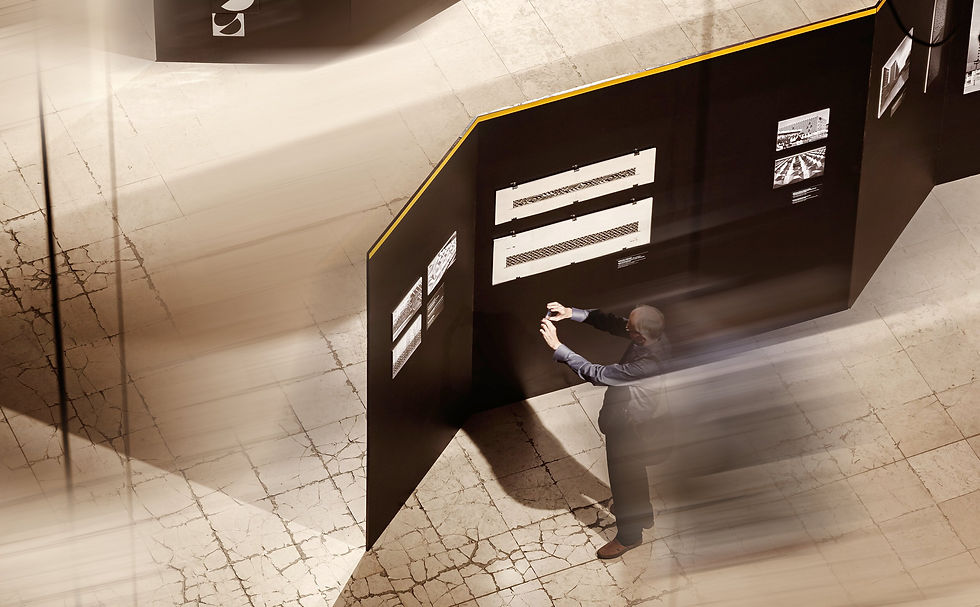
Planbureau designed an exhibition system inspired by scientific publications. Large display surfaces functioned as pages, placing historical objects directly beside their explanations. Custom acrylic covers protected the exhibits without visually separating them from the text, creating a unified spatial and informational layout.
Client
Industry
Product
Location
Timeline
Services
Semmelweis Museum of Medical History
Museum / Culture
Temporary Museum Exhibition
Budapest, Hungary
n/a
Concept Development
Exhibition Design
Space Design
Product Design
Design Engineering


Objects Separated from Context
The exhibition brought together historical medical instruments, documents and extensive explanatory texts. Each object needed to be clearly connected to the information describing its origin, purpose and significance.
Conventional museum showcases often separate physical exhibits from their accompanying descriptions. With so much material to present, this separation could make the exhibition difficult to follow. The museum needed a display system that allowed visitors to understand objects and information together.


Translating Pages into Space
Planbureau drew inspiration from scientific and educational books, where isolated images of objects appear directly alongside explanatory text. The challenge was to translate this two-dimensional editorial structure into a three-dimensional museum installation.
Historical objects required appropriate physical protection without losing their visual connection to the surrounding information. The display surfaces, object positions and protective covers had to work together while accommodating exhibits of different shapes and sizes.


A Book Unfolded into Space
Planbureau created an exhibition system built from large, planar display surfaces resembling pages of a book. Historical instruments and documents were positioned directly on these surfaces, with explanatory text arranged alongside them.
Instead of conventional showcases, custom acrylic covers were individually sized to protect each object while keeping the surrounding display visually open. The result integrated exhibits and information into a single composition, allowing visitors to read the exhibition as a sequence of spatially arranged pages


Explore more
Parallel Paths
